

https://www.jinguanparking.com/
Rapid urbanization has led to a continuous surge in vehicle ownership, creating a growing imbalance between parking demand and limited urban space. Traditional surface parking lots feature large land occupation and low space efficiency, making them inadequate for modern urban construction. After a century of technological upgrades, mechanical parking systems have become a reliable solution for urban parking difficulties and smart traffic development. With high space efficiency, safety and intelligence, they are now widely adopted in diverse urban scenarios.
Development History of Mechanical Parking Equipment
The concept of mechanical stereo parking originated in the United States in the 1920s. The world’s first double-layer mechanical parking garage broke the limitations of flat parking and pioneered vertical space expansion for vehicle storage. Starting from the 1960s, countries including Japan and South Korea, facing land shortages, focused heavily on stereo parking technology. They optimized equipment stability and safety, driving industrial maturity and global popularization.
China’s mechanical parking industry started in the 1980s. In 1988, the first domestic lifting andsliding parking garage was completed in Beijing, filling the domestic gap in mechanical parking application. Driven by rapid urbanization, local enterprises broke through overseas technical barriers, realizing independent R&D and diversified product categories. In the 21st century, fueled by smart city construction, mechanical parking equipment has achieved intelligent upgrading, integrating smart sensors, automatic scheduling and unmanned operation to reach advanced industry standards.
Core Advantages of Mechanical Parking Systems
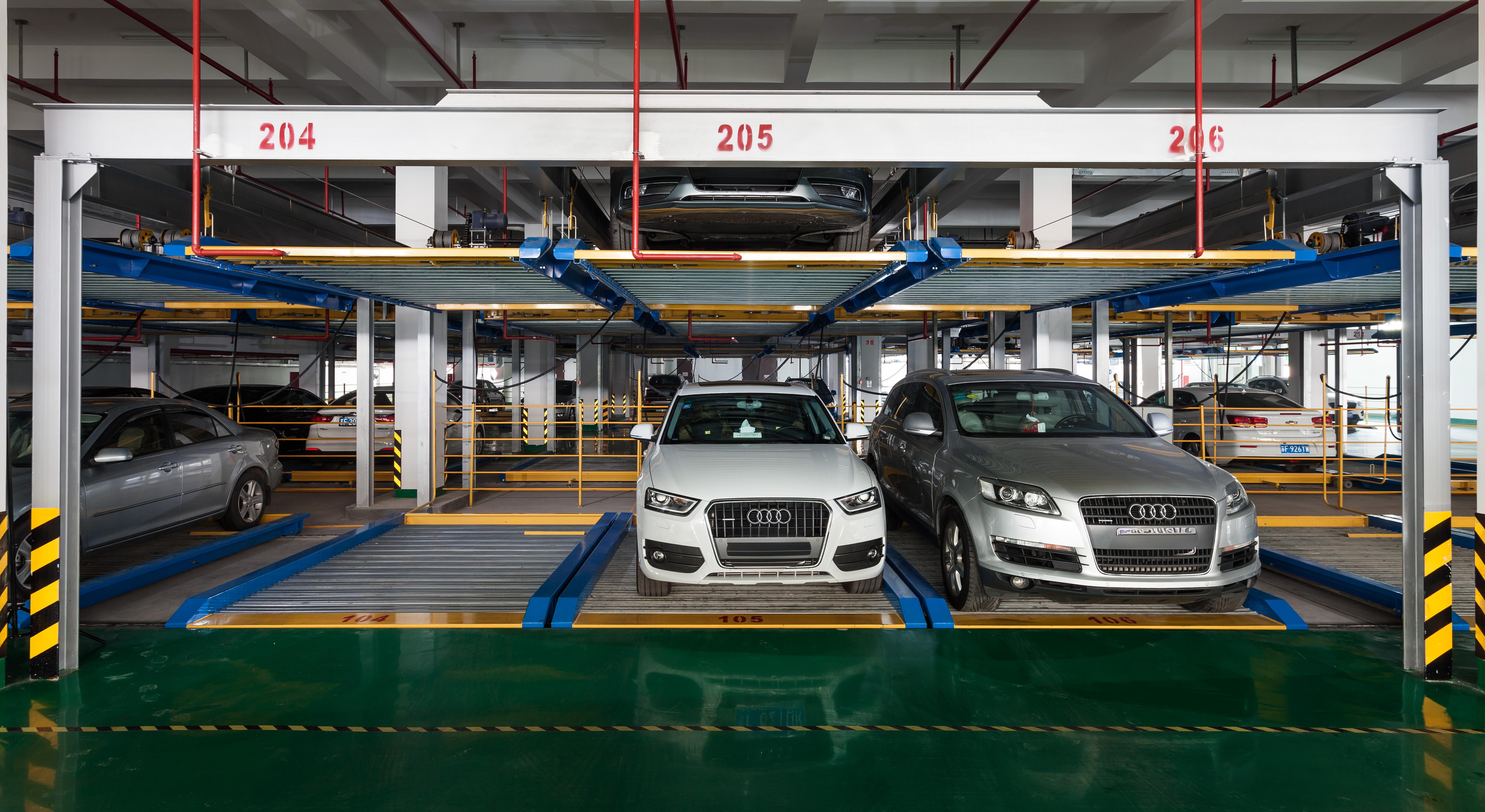
Mechanical parking solutions outperform traditional parking methods in multiple key aspects. Primarily, they maximize land utilization. By adopting vertical stacking design, they can increase parking capacity by 3 to 8 times within the same floor area, perfectly solving parking shortages in old residential communities, central business districts and other space-tight areas.
Additionally, these systems deliver strong scenario adaptability. Covering lifting &sliding , vertical lifting, stacker and other mainstream types, they suit residential compounds, office buildings, hospitals, industrial parks and more. The equipment supports installation in open-air, underground, new-built and renovated sites. Equipped with license plate recognition, one-click parking and intelligent scheduling functions, the systems eliminate manual vehicle moving, greatly boost access efficiency and enable unattended smart parking management.
In terms of safety and cost performance, multi-protection mechanisms including anti-fall devices, infrared early warning and overload prevention fully avoid vehicle scratches, damage and theft via enclosed parking. Unlike traditional parking projects requiring massive civil engineering, mechanical parking systems feature short construction cycles and lower upfront investment. They require minimal daily maintenance with low failure rates, offering superior long-term economic benefits while standardizing parking order and improving urban landscape.
Industry Trends & Brand Services
Currently, the mechanical parking industry is evolving toward intelligence, modularization and low maintenance. Ongoing urban renewal and old community renovation projects keep driving steady market demand for high-performance stereo parking solutions.
JinGuan parking (https://www.jinguanparking.com/)has long specialized in the R&D, production, customized installation and one-stop maintenance of mechanical parking equipment. We provide tailored stereo parking solutions for all application scenarios with stable and highly adaptable products. Whether you need parking supporting facilities for new projects, space expansion for old sites, or equipment customization and upgrade services, feel free to consult Jinguan. We deliver professional technical support and considerate all-round services to resolve urban parking challenges and empower smart city parking development.
Post time: Jun-05-2026